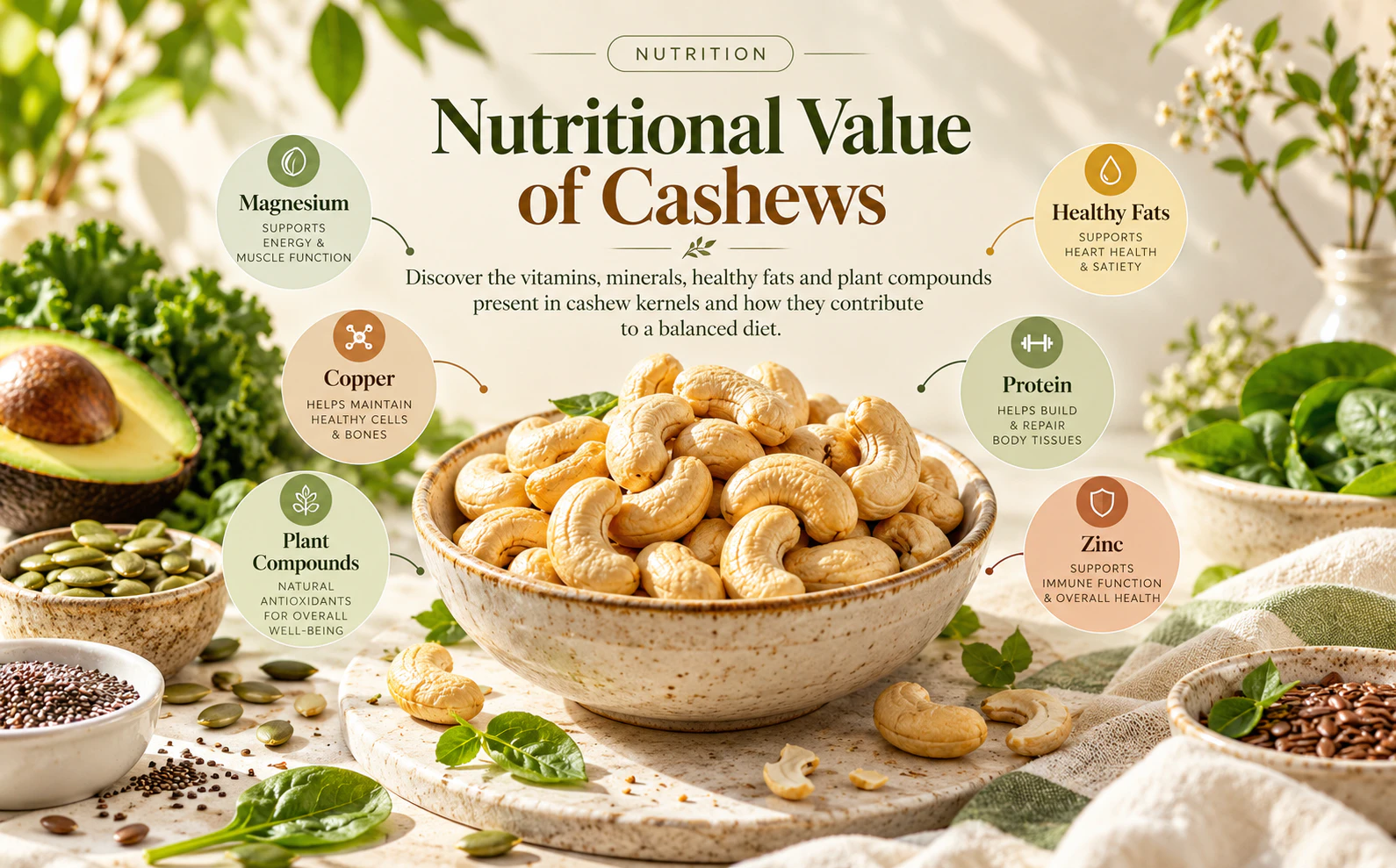
Cashews are nutrient-dense tree nuts valued for their creamy texture, mild flavour and naturally rich nutritional profile. They contain a combination of healthy fats, plant-based protein, carbohydrates, vitamins, minerals and beneficial plant compounds. When included in suitable portions, cashews can form part of a balanced and varied everyday diet.
The nutritional value of cashews makes them useful in many different food applications, ranging from simple snacks to traditional and modern recipes. They can be eaten on their own or added to breakfast dishes, curries, desserts, salads, smoothies and plant-based meals. Their nutrient content also makes them popular among people looking for convenient whole-food options.
Cashews provide several important nutrients in a relatively small serving. They contain unsaturated fats, protein and carbohydrates along with minerals such as magnesium, copper, phosphorus, zinc and iron. These nutrients are involved in many normal functions of the body and contribute to overall nutritional balance when consumed as part of a varied diet.
In addition to their mineral content, cashews also provide naturally occurring plant compounds and small amounts of different vitamins. Their nutritional composition makes them suitable for people of different age groups when consumed appropriately. Like other nuts, cashews are calorie-dense, so portion size is an important part of including them in a balanced diet.
A significant portion of the energy in cashews comes from naturally occurring fats. Cashews contain mainly unsaturated fats, including monounsaturated and polyunsaturated fats. These types of fats are widely included in balanced dietary patterns and can replace foods containing higher amounts of less desirable processed fats.
Dietary fats also help the body absorb certain fat-soluble nutrients and contribute to the flavour and texture of food. Cashews provide these fats in a natural whole-food form together with protein, carbohydrates and minerals. This combination makes them both satisfying and nutritionally dense when consumed in moderate portions.
Cashews contain plant-based protein, making them a useful addition to diets that include more plant foods. Protein supports the normal growth, repair and maintenance of body tissues. Adding cashews to meals can help increase overall dietary protein while also contributing healthy fats and several important micronutrients.
Cashews can be especially useful in vegetarian and plant-focused food patterns. They can be combined with grains, pulses, vegetables, seeds and other nuts to create more varied meals. Cashew pastes, sauces and spreads also provide a simple way to include plant-based protein in different dishes.
Cashews contain carbohydrates along with fats and protein, giving them a balanced mix of macronutrients. This combination can provide useful energy during the day and makes cashews convenient as a snack between meals. Their compact size and easy storage also make them suitable for travel, work breaks and active lifestyles.
Because cashews contain both fats and protein, their energy is delivered differently from many highly refined snack foods. They can be paired with fruits, whole grains or seeds to create a more satisfying snack. This makes them useful in a wide range of balanced meal and snack combinations.
Magnesium is one of the important minerals naturally present in cashews. This mineral is involved in many normal processes in the body, including energy metabolism, muscle function and bone maintenance. Including magnesium-rich foods as part of a varied diet can help contribute to meeting daily nutritional requirements.
Cashews can be one of several dietary sources of magnesium alongside vegetables, whole grains, legumes, seeds and other nuts. Their versatility makes them easy to include in meals without major changes to everyday eating habits. This is one reason they are widely used in different food cultures.
Cashews are known for containing copper, a trace mineral required in small amounts by the body. Copper contributes to several normal biological processes and is found naturally in a variety of plant and animal foods. Cashews can therefore contribute to total dietary copper intake as part of a balanced food pattern.
Since trace minerals are needed only in relatively small quantities, dietary variety is important. Cashews provide copper together with other nutrients rather than as an isolated source. This makes them nutritionally useful when combined with fruits, vegetables, grains and protein-rich foods.
Phosphorus is another mineral naturally found in cashew kernels. It works together with other nutrients in supporting normal bone structure and several cellular functions. A balanced intake of phosphorus comes from many common foods, and cashews can contribute to this intake as part of a varied diet.
Bone health depends on a combination of nutrients, physical activity and overall lifestyle. Cashews can complement foods that provide calcium, vitamin D, protein and other nutrients associated with bone maintenance. Their phosphorus content adds another useful mineral to their overall nutritional profile.
Zinc is present naturally in cashews and is an important trace mineral required for normal body functions. It is found in a range of foods, including nuts, seeds, legumes and animal-based products. Including diverse sources of zinc in the diet helps support overall nutritional adequacy.
Cashews can be a convenient plant-based source of zinc, especially when included with other nutrient-rich foods. They are easy to add to cereals, rice dishes, vegetable recipes and snacks. This flexibility allows zinc-rich foods to be included in everyday meals without complicated preparation.
Cashews naturally contain iron, a mineral that plays an important role in normal body functions. Plant-based iron is found in nuts, seeds, legumes, leafy vegetables and fortified foods. Cashews can contribute a portion of this mineral as part of a balanced dietary pattern.
People following plant-focused diets often combine different iron-containing foods to improve dietary variety. Cashews can be included with fruits, vegetables, pulses and whole grains in many meal combinations. This makes them a practical addition to both traditional and modern diets.
Cashews contain small amounts of several vitamins that contribute to their overall nutritional value. While they are not usually considered a primary source of most vitamins, they can complement other foods such as fruits, vegetables and whole grains in a balanced diet. Their strength comes from the combination of many nutrients in one food.
The vitamin content of cashews should be viewed as part of their complete nutritional profile rather than in isolation. A diverse diet remains important for obtaining a broad range of vitamins. Cashews can add variety while also providing healthy fats, protein and minerals at the same time.
Cashew kernels contain naturally occurring plant compounds that contribute to the overall nutritional characteristics of the nut. These compounds are present alongside fats, protein, vitamins and minerals and are one reason whole foods are often valued as part of balanced eating patterns.
The exact composition can vary depending on growing conditions, processing methods and storage. Proper handling and processing help preserve the natural quality of cashew kernels so that consumers receive a clean and consistent product. This is especially important for premium and export-grade cashews.
Cashews also contribute a small amount of dietary fibre. Fibre is commonly obtained from plant foods such as fruits, vegetables, whole grains, nuts, seeds and legumes. While cashews are not among the highest-fibre foods, they can still contribute to total daily fibre intake.
Combining cashews with other fibre-rich foods is a simple way to create more balanced meals and snacks. For example, cashews can be added to oatmeal, fruit bowls, salads or whole-grain dishes. This provides both texture and additional nutritional value.
Whole cashew kernels provide the same basic nutritional composition found across different commercial cashew grades. Grade names such as W210, W240, W320 and W450 generally refer to kernel size and count rather than major differences in the basic nutritional qualities of the nut.
Consumers may choose a particular grade based on appearance, size, recipe requirements or budget. Premium whole kernels are often preferred for direct snacking and presentation, while splits and pieces are commonly used in bakery, confectionery and food manufacturing applications.
Cashews are widely used in vegetarian diets because they provide plant-based protein, healthy fats and several minerals. They can be eaten directly or transformed into creamy sauces, dips and spreads. Their mild taste allows them to blend well with both sweet and savoury ingredients.
Soaked and blended cashews are also used in plant-based cooking to create smooth textures in sauces, soups and desserts. This versatility makes cashews useful not only for their nutritional value but also for their ability to improve the texture and richness of many recipes.
One of the practical advantages of cashews is their convenience. They require little preparation and can be stored and carried easily. A small serving can be included in snack boxes, office meals or travel food packs, making them suitable for people with busy schedules.
Plain or lightly roasted cashews can provide an alternative to heavily processed snack foods. They can also be combined with dried fruits, seeds or other nuts to create homemade snack mixes. Keeping portions moderate helps balance their high nutrient and energy density.
Cashews can be incorporated into a wide variety of meals and recipes. They are frequently used in curries, rice dishes, sweets, bakery products, salads and breakfast preparations. Their creamy texture and mild flavour make them suitable for both traditional and contemporary food applications.
Ground cashews can be used to thicken gravies and sauces, while crushed kernels can be used as toppings or garnishes. Whole cashews are also widely used in festive and premium dishes. This versatility makes it easy to benefit from their nutritional value in different forms.
Cashew pieces and split kernels generally retain the same basic nutritional characteristics as whole kernels. Their main difference is appearance and size rather than the overall nutrient composition of the cashew itself. This makes them practical for cooking, baking and industrial food production.
Pieces and splits are often used where appearance is less important, such as in sweets, confectionery, nut butters, sauces and bakery products. They provide the same natural flavour and many of the same nutrients while often offering greater flexibility for food processing applications.
Cashews are nutrient-dense, but they also contain a significant amount of energy because of their natural fat content. For this reason, they are best consumed in suitable portions rather than in excessive quantities. Portion control allows people to enjoy their nutritional benefits while maintaining overall dietary balance.
The ideal amount may differ depending on age, activity level, total energy requirements and the rest of a person's diet. Cashews are most useful when they are one component of a broader eating pattern that includes fruits, vegetables, whole grains and other nutrient-rich foods.
Cashews can be eaten directly as a snack or added to a wide variety of everyday foods. They work well in breakfast bowls, salads, rice dishes, curries, desserts and smoothies. Their mild flavour makes them easy to combine with both sweet and savoury ingredients.
They can also be used to prepare nut pastes, spreads, creamy sauces and plant-based beverages. Combining cashews with fruits, vegetables, whole grains and legumes helps create greater dietary variety. This is one of the easiest ways to enjoy their nutritional value.
Nutritional value is best supported when cashews are properly processed, stored and handled. Good quality kernels should be clean, fresh and free from signs of excessive moisture or deterioration. Proper packaging helps protect the kernels from air, humidity and environmental contamination.
Quality-controlled cashew processing also helps maintain consistency in colour, texture and overall product condition. For commercial markets, grading, laboratory testing, hygienic handling and suitable storage practices contribute to producing dependable high-quality cashew kernels.
Cashews provide a valuable combination of healthy unsaturated fats, plant-based protein, carbohydrates, vitamins, minerals and naturally occurring plant compounds. Important minerals such as magnesium, copper, phosphorus, zinc and iron contribute to their overall nutritional value and make cashews a useful whole-food option.
Whether consumed as a snack, used in everyday cooking or incorporated into plant-based recipes, cashews can fit easily into a balanced diet. Their nutritional density, convenience and culinary versatility make them one of the most widely used nuts for both household and commercial food applications.