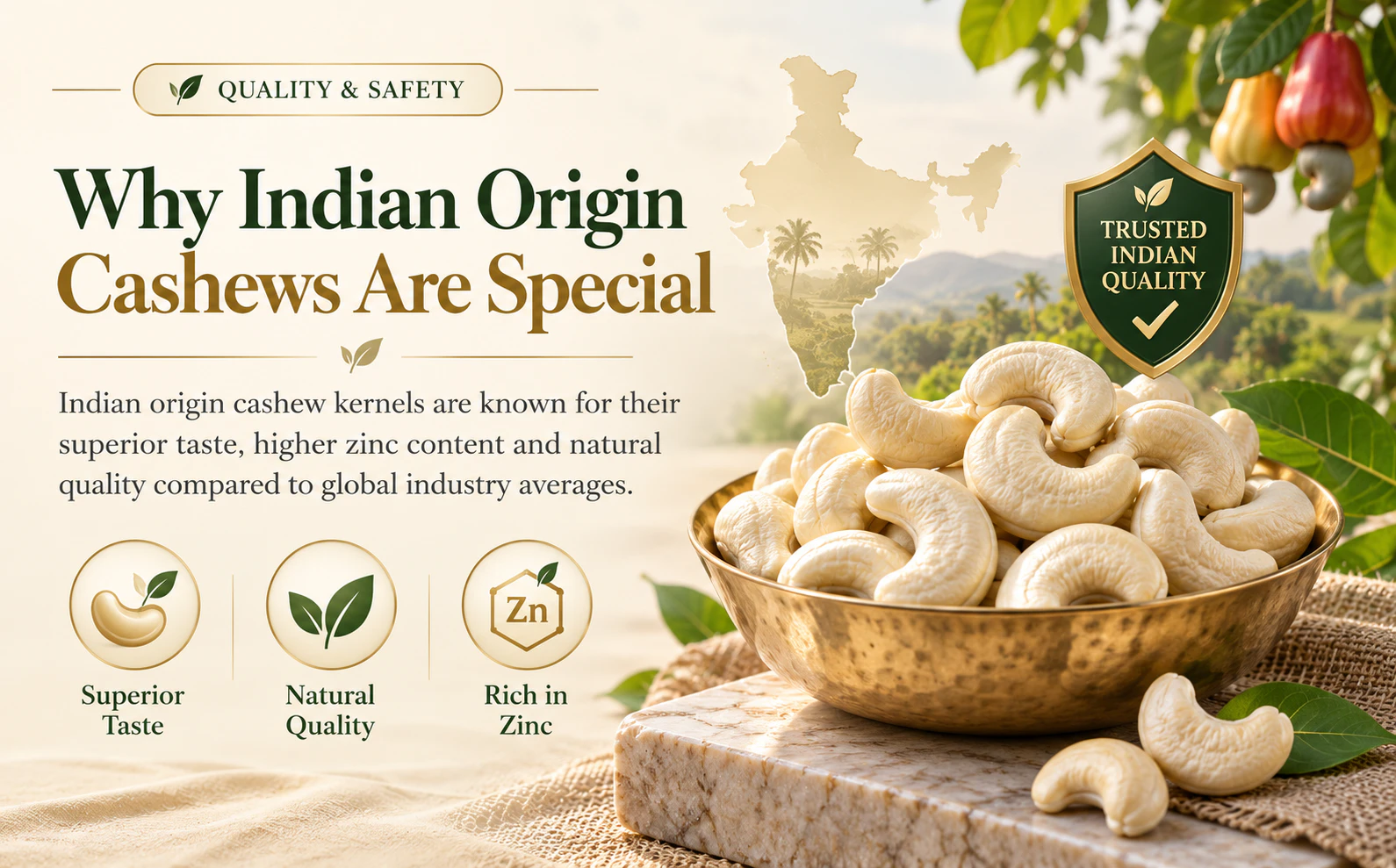
Indian origin cashew kernels are widely appreciated for their natural taste, texture, appearance and established processing quality. India has a long history of cashew cultivation and processing, supported by experienced processors and skilled workers who carefully handle kernels through different production stages. This experience contributes to the consistent quality associated with Indian cashews.
Indian cashews are used across domestic and international markets for direct consumption, retail packing, confectionery, bakery products and food manufacturing. Their pleasant flavour, creamy texture and availability in different commercial grades make them suitable for a wide range of applications while maintaining the natural characteristics expected from high-quality cashew kernels.
The quality of cashew kernels depends on several factors including growing conditions, raw nut maturity, processing methods, moisture control and storage. Indian cashew processing combines traditional expertise with modern production and quality-control techniques. This careful handling helps protect the natural colour, flavour and texture of the kernel from processing through final packing.
Indian processing units also produce a wide range of whole, split and broken cashew grades to meet different customer requirements. Premium whole kernels are commonly selected for direct consumption and retail use, while smaller grades and pieces are widely used by bakeries, confectionery manufacturers and commercial food-processing businesses.
One of the main characteristics associated with Indian origin cashews is their naturally rich and creamy flavour. Properly processed kernels have a mild sweetness and smooth nutty taste that works well in both sweet and savoury recipes. Their flavour makes them suitable for direct snacking as well as premium food preparation.
Processing methods can influence the final flavour of cashew kernels. Controlled steaming, careful drying and suitable storage help protect the natural taste of the kernels. Excessive heat or improper storage may affect flavour, which is why careful processing is important for maintaining consistent quality.
Texture is another important quality characteristic of premium cashew kernels. High-quality cashews generally provide a pleasant combination of firmness and natural creaminess. Correct moisture levels during processing and storage help maintain this texture while reducing the risk of the kernels becoming excessively soft or brittle.
Proper drying and moisture control are particularly important for maintaining the expected texture of finished cashews. Kernels must contain enough natural moisture to avoid excessive breakage while remaining sufficiently dry for safe storage. This balance contributes to a better eating experience and improved product stability.
Cashew kernels naturally contain healthy unsaturated fats, plant-based protein, carbohydrates and several essential minerals. They are commonly recognised as a nutrient-dense food that can be included in a balanced diet. Their nutritional profile makes cashews useful not only as a snack but also as an ingredient in many traditional and modern food products.
Minerals naturally present in cashew kernels include magnesium, copper, phosphorus, zinc and iron. The exact nutritional composition can vary depending on growing conditions, variety and other natural factors. Cashews therefore contribute several nutrients while also providing energy and plant-based protein.
Zinc is one of the trace minerals naturally present in cashew kernels. It is an essential nutrient required in small amounts as part of a balanced diet. Cashews can contribute to dietary zinc intake together with other foods such as seeds, legumes, grains and different plant or animal protein sources.
The mineral composition of cashews may vary depending on factors such as soil conditions, growing region, variety and agricultural practices. This means nutritional values should be understood as naturally variable rather than identical across every batch. Quality testing can help provide more specific nutritional information where required.
India has been associated with cashew processing for many decades, creating considerable experience in shelling, peeling, grading and preparing kernels for commercial markets. Skilled processing is especially important because cashew kernels are delicate and can easily break if they are handled roughly during production.
Experienced workers and modern equipment are often used together to achieve better production consistency. Machinery may support steaming, shelling, drying and sorting, while manual inspection can help identify colour variations, damaged kernels and other visible quality differences. This combination supports consistent finished products.
Good quality finished kernels begin with appropriate raw cashew nuts. Raw nuts are generally evaluated for maturity, size, moisture and overall physical condition before processing. Proper raw material selection can improve kernel recovery, reduce defects and help processors maintain more consistent commercial grades.
Storage of raw cashew nuts is also important before processing begins. Nuts should be protected from excessive moisture and environmental contamination. Suitable handling and storage practices help maintain the condition of the raw material until it enters the steaming, shelling and drying stages.
Steaming helps prepare raw cashew nuts for shell removal by making the shells easier to handle during processing. The temperature and duration of steaming need to be carefully controlled because excessive heat can affect kernel colour, texture and overall appearance.
After steaming, the nuts are cooled and conditioned before shelling. Careful shell removal helps protect the kernel and increase the percentage of whole kernels recovered. Maintaining whole-kernel integrity is particularly important for premium grades that are intended for retail or export markets.
After shelling and drying, the thin outer skin surrounding the kernel must be removed. This process requires careful handling because the cashew kernel can break easily once it has been separated from the shell. Skilled peeling helps maintain a clean appearance while protecting the natural shape of the kernel.
Kernels are generally inspected after peeling to remove remaining skin, damaged pieces and unsuitable material. Careful handling throughout this process helps reduce unnecessary breakage and supports the appearance required for higher commercial grades. Clean peeled kernels are then ready for sorting and grading.
Indian cashew processors produce many grades based on kernel size, shape, colour and breakage. Common whole-kernel grades include W180, W210, W240, W320 and W450, while splits and pieces are available for different food-processing requirements. Each grade has a particular commercial application.
Larger whole kernels are often preferred for premium retail products, gifting and direct snacking because of their appearance. Smaller whole kernels and broken grades are commonly used in confectionery, bakery products, sweets, sauces and commercial food manufacturing.
Quality sorting is an important stage before cashew kernels are packed. Kernels can be examined for size, colour, shape, breakage and visible defects. Sorting helps create more consistent batches and ensures that different grades are separated according to their intended commercial specifications.
Modern processing facilities may combine manual inspection with mechanical or optical sorting systems. Technology can improve speed and consistency, while experienced quality-control teams provide additional visual inspection. Together, these methods help maintain the expected quality of finished cashew products.
Food safety is an important part of high-quality cashew processing. Processing areas, machinery, storage facilities and packaging equipment need to be maintained under clean and hygienic conditions. Proper sanitation reduces the risk of contamination and supports safe handling throughout the production process.
Production facilities may follow documented cleaning schedules, pest-control procedures, employee hygiene requirements and quality monitoring systems. These practices are especially important for products supplied to professional food manufacturers and international markets where specific quality standards may apply.
Laboratory testing can be used to evaluate important quality and food-safety characteristics of cashew kernels. Depending on customer and market requirements, testing may cover moisture, microbiological parameters, pesticide residues, heavy metals, aflatoxins and other relevant quality indicators.
Testing provides additional assurance beyond visual inspection. Results can help processors verify that products meet agreed specifications before dispatch. Laboratory analysis is particularly useful for export shipments and commercial food-production customers that require documented product-quality information.
Moisture plays an important role in the quality and storage stability of cashew kernels. Excessive moisture can negatively affect texture and shelf stability, while extremely dry kernels may become more brittle and susceptible to breakage. Maintaining an appropriate moisture balance is therefore important.
Processors carefully manage drying, conditioning and storage conditions to maintain suitable kernel moisture. Proper packaging also helps limit exposure to humidity during transportation and storage. Together, these measures support the natural texture and quality of finished cashew kernels.
Appearance is an important factor in commercial cashew grading. Premium kernels are generally expected to have a clean and relatively uniform natural appearance without excessive discoloration or visible defects. Proper processing helps maintain the natural cream or pale colour associated with high-quality kernels.
Temperature control during steaming and drying can influence kernel colour, which makes careful processing essential. Proper storage also protects kernels from conditions that may cause deterioration. Attractive and consistent appearance is particularly important for premium retail and export products.
Indian origin cashew kernels are supplied to a wide range of domestic and international customers. Different grades allow exporters and buyers to select kernels according to their intended application, quality requirement and commercial budget. Whole grades, splits and pieces each serve different segments of the global food market.
Export preparation generally requires attention to product quality, hygiene, packaging, documentation and storage. Proper processing and quality-control practices help maintain consistency throughout transportation. This makes Indian cashews suitable for retail, wholesale and industrial food applications across different markets.
Indian cashew kernels can be used in a wide variety of food products. Whole kernels are commonly consumed as snacks or used as premium garnishes, while smaller kernels and pieces can be incorporated into sweets, bakery items, chocolates, cereals and confectionery. Their mild flavour allows them to work with many ingredients.
Cashews are also increasingly used in modern plant-based food preparation. Soaked and blended kernels can be used in creamy sauces, spreads, desserts and beverages. Their versatility allows manufacturers, restaurants and households to use cashews across both traditional and contemporary recipes.
Proper packaging is necessary to protect processed cashew kernels from moisture, air and environmental contamination. Commercial kernels may be packed using vacuum or controlled packaging methods depending on the product and market requirement. Suitable food-grade packaging helps maintain freshness during storage and transportation.
Packaging should also protect kernels from physical damage during handling and shipping. Correct sealing, storage temperature and warehouse conditions all contribute to maintaining product quality. These measures are especially important when cashews are transported over long distances for international distribution.
Processed cashew kernels should be stored in clean, cool and dry environments away from excessive heat, humidity and direct sunlight. Suitable storage helps preserve their natural flavour, texture and overall quality while reducing the possibility of deterioration during the storage period.
Storage facilities should also protect products from pests, strong odours and other sources of contamination. Proper stock rotation and regular packaging inspection help maintain consistency. These practices support product quality from the processing unit through distribution and final delivery.
Buyers choose Indian origin cashews for several reasons, including their established processing tradition, range of available grades, natural flavour and flexible food applications. Experienced processing and careful grading allow suppliers to provide kernels suitable for different retail and commercial requirements.
The combination of skilled processing, quality inspection, hygienic handling and appropriate packaging supports consistent product quality. Whether required for direct consumption, premium retail packs, confectionery or large-scale food manufacturing, Indian cashews offer multiple grade and application options.
Indian origin cashew kernels stand out because of their natural flavour, appealing texture, nutritional value and long-established processing tradition. Careful raw nut selection, controlled steaming, skilled shelling, drying, peeling, grading and quality inspection all contribute to the final quality of the kernels.
Proper hygiene, laboratory testing, moisture control, packaging and storage further help protect the quality and safety of the finished product. With multiple commercial grades and broad food applications, high-quality Indian origin cashews continue to serve retail, food-service, manufacturing and international markets.