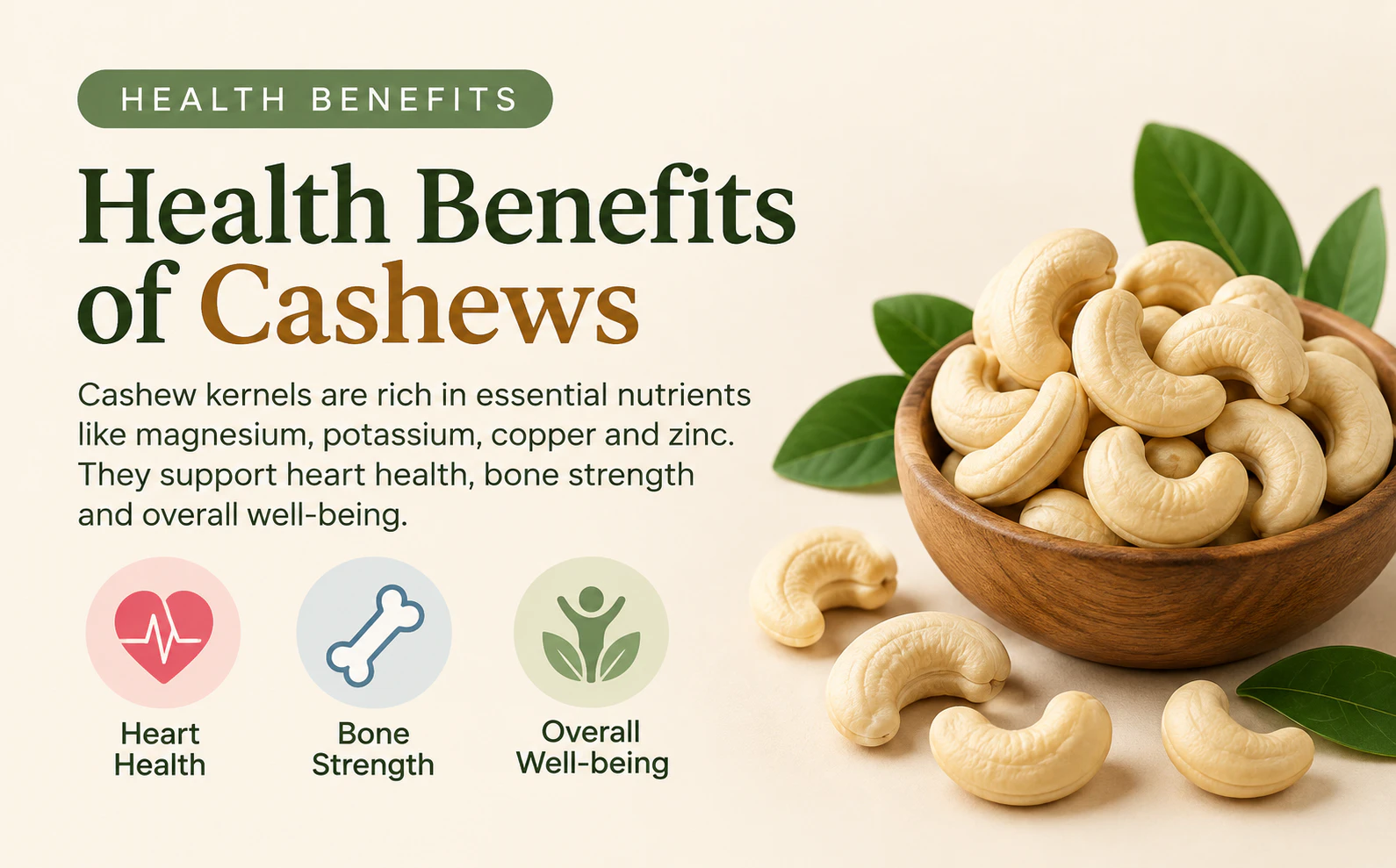
Cashews are one of the most widely enjoyed tree nuts across the world, valued for their creamy texture, mild flavour and natural nutritional profile. They can be eaten directly as a snack or added to a variety of everyday dishes. Cashews contain healthy fats, plant-based protein, carbohydrates and several important vitamins and minerals that can support a balanced daily diet.
Because of their versatility, cashews are commonly used in both traditional and modern food preparation. They can be added to curries, desserts, salads, breakfast dishes, smoothies and plant-based recipes. Their naturally rich flavour also makes them suitable for preparing cashew milk, sauces, spreads and other nutritious food products.
Cashews contain a combination of healthy unsaturated fats, protein, carbohydrates, vitamins and naturally occurring minerals. They are particularly known for nutrients such as magnesium, copper, phosphorus, zinc and iron. These nutrients are involved in many normal functions of the human body and contribute to overall nutritional balance when included as part of a varied diet.
In addition to minerals, cashews also provide plant-based protein and energy. Their nutrient density makes them useful as a convenient snack for people with active lifestyles. Consuming cashews in appropriate portions can help provide energy between meals while also contributing beneficial fats and essential nutrients to the overall diet.
Cashews naturally contain monounsaturated and polyunsaturated fats, which are commonly considered healthier dietary fats when consumed in moderation. These types of fats can be included as part of a balanced eating pattern that focuses on whole foods, vegetables, fruits, grains and other nutritious plant-based ingredients.
Replacing foods that contain excessive saturated or processed fats with healthier food choices may help support overall cardiovascular wellness. Cashews can be included in such a diet because they provide naturally occurring fats along with protein, minerals and other nutrients. Portion control remains important because nuts are naturally calorie-dense foods.
Cashews provide a combination of fats, protein and carbohydrates, making them a convenient source of natural dietary energy. A small serving can be consumed between meals, during travel or as part of breakfast to help provide sustained energy. Their compact size also makes them easy to carry as a nutritious snack.
Unlike many heavily processed snack foods, plain cashews can be enjoyed without requiring additional ingredients. They can also be combined with dried fruits, seeds or whole grains to prepare homemade snack mixes. This makes cashews suitable for people looking for simple and convenient food options during busy working days or active routines.
Cashews naturally contain minerals such as magnesium and phosphorus, both of which are commonly associated with normal bone structure. These minerals are also involved in several other biological processes throughout the body. Including a variety of mineral-rich foods in the diet can contribute to maintaining overall nutritional health.
Bone health depends on multiple factors including diet, physical activity, age and overall lifestyle. Cashews can be one part of a balanced eating pattern that includes calcium-rich foods, vegetables, fruits and adequate protein. Their magnesium and phosphorus content adds additional nutritional value to everyday meals and snacks.
Cashews contain plant-based protein, making them useful for people who want to increase the variety of plant foods in their diet. Protein plays an important role in normal growth, maintenance and repair of body tissues. Adding nuts such as cashews to meals can help increase overall dietary protein while also providing healthy fats and minerals.
Cashews can be especially convenient in vegetarian and plant-focused meals. They can be added to salads, vegetable dishes, grain bowls, breakfast cereals and homemade snacks. Cashew-based sauces and spreads can also be used in recipes where a creamy texture is required without relying entirely on traditional dairy ingredients.
Cashews contain several naturally occurring minerals including copper, magnesium, phosphorus, zinc and iron. Each of these nutrients contributes to different normal functions within the body. For example, minerals are involved in processes related to energy production, tissue maintenance, enzyme activity and overall nutritional well-being.
Eating a diverse range of whole foods is generally the best way to obtain essential nutrients. Cashews can contribute to that variety by providing several minerals in a single food. They can easily be combined with fruits, vegetables, grains and other nuts to create nutrient-rich meals and snacks.
People with busy or active lifestyles often prefer foods that are convenient, portable and satisfying. Cashews are easy to store, carry and consume without complicated preparation. Their combination of healthy fats, protein and carbohydrates makes them a practical snack choice for travel, office breaks, outdoor activities and everyday routines.
They can also be included in pre-prepared snack boxes or mixed with seeds and dried fruits for added variety. Because cashews are naturally flavourful, they can be enjoyed without excessive seasoning or additional ingredients. Choosing plain or lightly roasted cashews can help keep the snack simple while retaining their natural taste.
Cashews have become popular in vegetarian and plant-based cooking because of their smooth texture and mild flavour. When soaked and blended, they can be used to prepare creamy sauces, dips, desserts and plant-based beverages. Their versatility allows them to be incorporated into many different recipes without overpowering the flavour of other ingredients.
Cashew-based recipes are commonly used as alternatives in dishes that require a creamy texture. They can be blended with herbs, vegetables, fruits or spices depending on the recipe. This flexibility makes cashews valuable not only as a snack but also as an ingredient in modern food preparation.
One of the main advantages of cashews is how easily they can be included in everyday meals. They can be sprinkled over breakfast bowls, added to salads, mixed into rice dishes or used as a topping for desserts. Whole cashews can also be roasted or lightly toasted to enhance their natural flavour and texture.
Ground or blended cashews can be used in sauces, soups and gravies to create a smooth and rich consistency. They are also commonly used in traditional sweets and festive dishes. Because they work well with both sweet and savoury flavours, cashews remain one of the most versatile nuts used in kitchens around the world.
Modern food habits increasingly focus on convenient foods that also provide nutritional value. Cashews fit well into this trend because they are easy to consume, naturally flavourful and compatible with many different diets. They can be included in traditional dishes as well as contemporary recipes such as smoothies, energy snacks and plant-based foods.
Their long shelf life and easy storage also make them suitable for households, restaurants, bakeries and food manufacturers. From simple snacking to premium food preparation, cashews continue to play an important role in both domestic and commercial food applications.
Cashews are nutrient-dense, but they are also naturally rich in calories because of their healthy fat content. For this reason, they are generally best enjoyed in moderate portions as part of a balanced diet. The appropriate serving size may vary depending on an individual's overall diet, energy needs and lifestyle.
Instead of consuming large amounts at once, cashews can be added in smaller portions to meals and snacks throughout the day. Combining them with fruits, vegetables, grains and other nutritious foods helps create better balance and variety. People with specific dietary needs or nut allergies should follow appropriate professional guidance.
Cashews can be enjoyed directly as a simple snack, either raw or lightly roasted depending on preference. They can also be included in breakfast cereals, oatmeal, salads, rice dishes, curries and vegetable preparations. Their mild flavour blends easily with many ingredients without overpowering the taste of the final dish.
Cashews are also widely used in desserts, bakery products, smoothies, nut butters, sauces and plant-based recipes. Soaked cashews can be blended into a smooth paste for creamy dishes, while crushed cashews can be used as toppings or garnishes. This versatility makes it easy to include cashews in both everyday meals and special recipes.
When choosing cashews, quality, freshness and proper processing are important considerations. Good quality kernels generally have a clean appearance, consistent texture and pleasant natural flavour. Proper storage also helps protect cashews from excess moisture, heat and environmental contamination.
Cashews should ideally be stored in a cool and dry environment, especially after opening the package. Airtight containers can help maintain freshness and reduce exposure to moisture. For commercial applications, proper handling, grading, packaging and food safety testing are also important for maintaining consistent product quality.
Cashews are a versatile and nutrient-rich food that can easily be included in a balanced daily diet. They provide healthy fats, plant-based protein, carbohydrates and several essential minerals while also offering a rich flavour and creamy texture. Their combination of nutrition and convenience makes them suitable for a wide variety of everyday food applications.
Whether enjoyed as a snack, added to traditional recipes or used in modern plant-based dishes, cashews offer both nutritional value and culinary flexibility. Consuming them in appropriate portions along with a diverse range of whole foods can help make meals more satisfying, varied and nutritionally balanced.