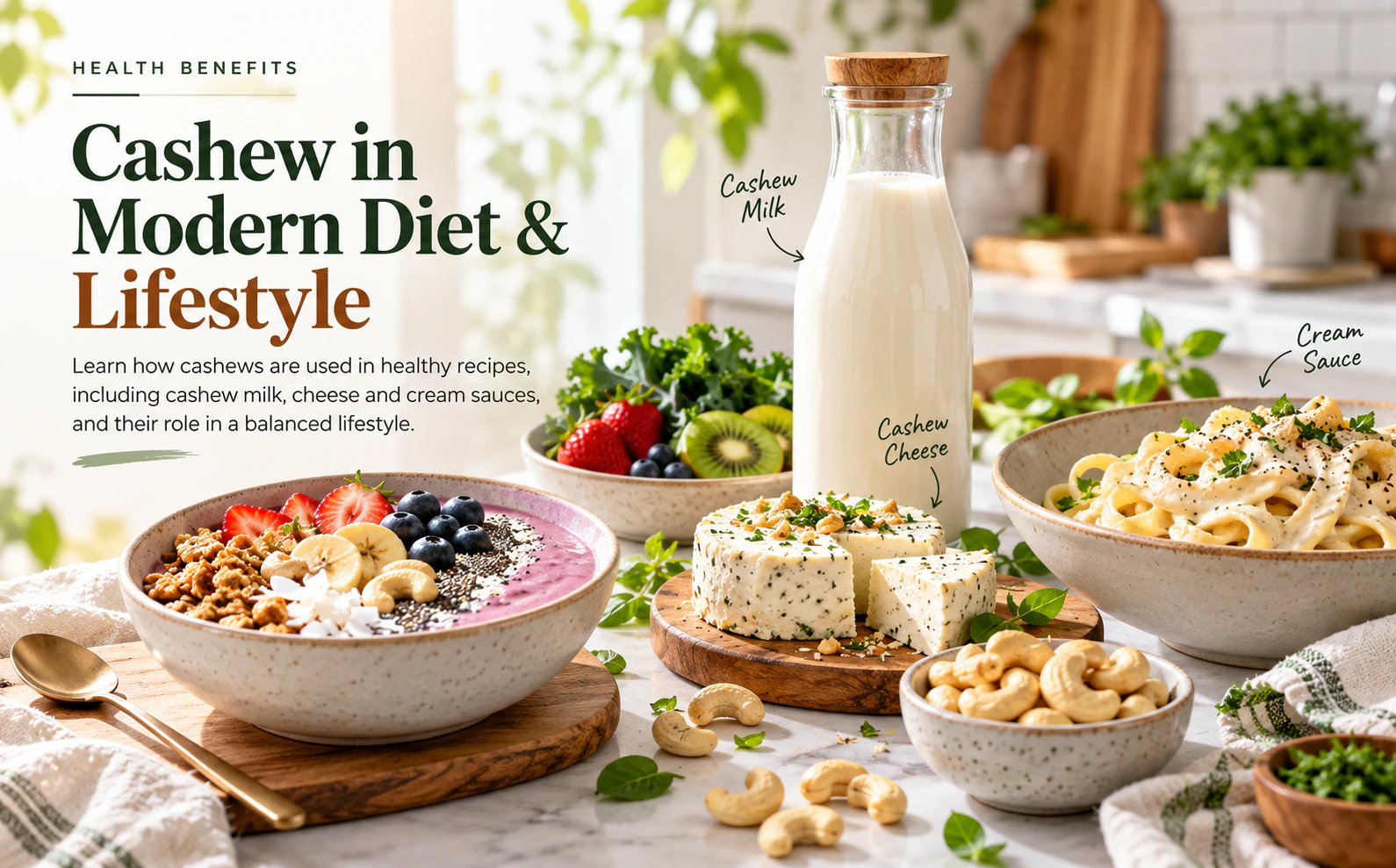
Cashews have become a popular ingredient in modern diets because they are versatile, nutritious and easy to include in everyday meals. Their mild flavour, creamy texture and natural richness make them suitable for both traditional recipes and newer plant-based food ideas. From simple snacks to sauces, beverages and desserts, cashews can be used in many different ways.
Modern lifestyles often require food choices that are convenient while still providing useful nutrients. Cashews contain healthy unsaturated fats, plant-based protein, carbohydrates and several important minerals. When consumed in suitable portions, they can form part of a varied and balanced eating pattern for different lifestyles.
One of the main advantages of cashews is their flexibility. They can be eaten directly, blended into creamy recipes, added to breakfast bowls, used in curries or incorporated into snacks and desserts. This adaptability makes them useful for both home cooking and commercial food preparation.
Cashews also work well with many different ingredients. Their naturally mild flavour allows them to pair with fruits, vegetables, grains, spices and sweet ingredients without overpowering the final dish. This makes them suitable for both traditional and contemporary recipes.
Cashews can be enjoyed as a convenient snack between meals. They require very little preparation and can be stored easily in small containers or snack packs. Their combination of fats, protein and carbohydrates can make them a satisfying option for busy workdays, travel or active routines.
Plain or lightly roasted cashews can be a simple alternative to heavily processed snack foods. They can also be mixed with seeds, dried fruits or other nuts to create homemade snack combinations that offer greater variety in taste and texture.
Cashews can be added to many breakfast dishes without changing the basic recipe. Whole or chopped kernels work well in oatmeal, cereals, fruit bowls and yogurt-based dishes. They add natural crunch while also contributing healthy fats, protein and minerals to the meal.
Cashews can also be blended into smoothies to create a richer and creamier texture. Soaked cashews are particularly useful in blended breakfast recipes because they become soft and combine easily with fruits, grains and plant-based ingredients.
Cashew milk is a plant-based beverage commonly prepared by blending soaked cashews with water until smooth. Depending on the recipe, the mixture may be strained or used directly for a richer texture. It can be consumed on its own or added to other dishes.
Cashew milk can be used in smoothies, breakfast cereals, coffee, desserts and cooking. Its naturally creamy consistency makes it useful in recipes where a softer and richer texture is preferred. Homemade versions can also be prepared with simple ingredients.
Cashew milk generally begins with soaking kernels in clean water until they become softer. The soaked cashews are then blended with fresh water until the mixture becomes smooth and creamy. The amount of water can be adjusted depending on the desired thickness.
Some recipes may include natural flavouring ingredients such as dates, vanilla or cinnamon. Unsweetened versions can be more suitable for savoury cooking. Homemade cashew milk should be stored properly and consumed within an appropriate period because it does not contain commercial preservatives.
Cashew cheese is another popular plant-based use of cashew kernels. Soaked cashews can be blended with water and selected ingredients to create a thick, creamy preparation. Herbs, spices or nutritional ingredients may be added depending on the desired flavour and intended recipe.
Cashew-based spreads can be used in sandwiches, wraps, dips and savoury dishes. Their soft consistency makes them easy to customise with herbs, garlic or vegetables. This flexibility has made cashew-based alternatives popular in modern plant-focused cooking.
Cashew cream is commonly made by blending soaked cashews with water until a smooth consistency is achieved. This base can then be seasoned and used in pasta, vegetable dishes, soups, curries and other recipes that require a creamy texture.
The mild flavour of cashews makes them suitable for both sweet and savoury sauces. Depending on the recipe, ingredients such as garlic, herbs, spices, vegetables or natural sweeteners can be added to create different flavour profiles.
Adding cashews to smoothies can increase richness and create a naturally creamy consistency. Soaked cashews blend more easily and can be combined with bananas, berries, mangoes, oats or other fruits and grains depending on personal preference.
Smoothies containing cashews can be suitable for breakfast, between-meal snacks or post-activity meals. Because cashews provide fats, carbohydrates and plant-based protein, they can help make blended drinks more substantial and satisfying.
Whole, roasted or chopped cashews can add texture to salads. Their mild flavour works well with fresh vegetables, leafy greens, fruits and grain-based salad combinations. They can also provide contrast to softer ingredients through their natural crunch.
Cashews can be paired with ingredients such as cucumber, carrots, leafy vegetables, apples, raisins or whole grains. Using small amounts as a topping is an easy way to add variety without significantly changing the basic structure of the meal.
Cashews have long been used in Indian cooking, especially in curries, gravies, sweets and rice dishes. They can be added whole for texture or ground into pastes to create rich and creamy sauces. This traditional versatility continues in modern diets.
Cashew paste is commonly used to thicken certain gravies and create a smooth texture. Whole kernels may also be roasted and used as garnish on biryani, pulao, sweets and festive dishes. These applications combine taste with attractive presentation.
Cashews are widely used in vegan and plant-based cooking because their texture becomes smooth when soaked and blended. They can be transformed into milk, spreads, sauces, desserts and creamy fillings without requiring traditional dairy ingredients.
Their plant-based protein and healthy fat content also make them a useful ingredient in meals focused on plant foods. Cashews work especially well when combined with legumes, vegetables, whole grains, fruits and seeds.
Cashews are frequently used in traditional and modern desserts. Whole kernels can be added as decoration, while ground or blended cashews can form part of fillings, creamy bases and sweet mixtures. Their natural richness works well in many dessert styles.
Cashew-based desserts can include puddings, sweets, cakes, energy bites and frozen treats. In plant-based recipes, blended cashews can provide a smooth consistency that works particularly well in creamy dessert preparations.
Cashew butter is produced by grinding cashew kernels until their natural oils create a smooth paste. Depending on the preparation method, it may be kept simple or combined with additional ingredients for flavour and texture.
Cashew butter can be spread on bread, added to oatmeal, blended into smoothies or used in sauces and desserts. Its smooth consistency makes it suitable for many modern recipes while providing the natural nutritional characteristics of cashew kernels.
Cashews provide plant-based protein and can complement other protein-containing foods in a meal. They can be combined with lentils, beans, seeds, grains and vegetables to create more varied plant-focused meal options.
Cashews should not necessarily be viewed as the only protein source in a meal. Instead, they can form one part of a balanced combination of ingredients. This approach helps improve dietary variety and overall nutritional balance.
Cashews naturally contain unsaturated fats, including monounsaturated and polyunsaturated fats. These fats contribute to the natural richness of the kernels and can be part of a balanced eating pattern when consumed in suitable portions.
Because nuts are naturally energy-dense, portion awareness remains important. Small servings can provide useful nutrients without requiring large quantities. This makes cashews convenient for balanced meal planning.
Cashews contain naturally occurring minerals such as magnesium, copper, phosphorus, zinc and iron. These nutrients contribute to several normal functions in the body and form part of the overall nutritional profile of cashew kernels.
A varied diet remains important because no single food provides every required nutrient. Cashews can therefore be combined with vegetables, fruits, grains and other whole foods to support nutritional diversity.
People with active lifestyles often look for foods that are easy to store and convenient to carry. Cashews can be packed into small containers and eaten during work breaks, travel, outdoor activities or after exercise.
Their combination of fats, protein and carbohydrates can make them more satisfying than many highly processed snack options. Cashews can also be combined with dried fruits or seeds to create convenient homemade snack mixes.
Cashews can be included in weight-conscious eating plans, but portion control is important because nuts are naturally calorie-dense. Small servings can add flavour, texture and satisfaction without requiring large quantities.
Instead of eating directly from a large pack, some people may find it useful to prepare smaller portions in advance. Combining cashews with fruits or vegetables can also create a more varied snack.
Cashews can be included in suitable forms in family meals. Ground or blended cashews may be used in porridges, sauces, desserts and other preparations depending on age and individual dietary requirements. Whole nuts can present a choking risk for young children.
Nut allergies must also be considered before introducing cashew-containing foods. Families should follow suitable professional guidance where allergies or specific dietary concerns are present. Safe preparation remains an important part of using nuts.
Cashews are particularly convenient for office workers and travellers because they require no cooking or refrigeration when stored appropriately. Small sealed portions can be carried easily and eaten when needed during the day.
They can also be combined with raisins, dried fruits or other nuts for more variety. Choosing plain or lightly seasoned kernels can keep the snack simple while allowing the natural cashew flavour to remain prominent.
Modern cafés and restaurants increasingly use cashews in beverages, sauces, salads, desserts and plant-based meals. Their versatility allows chefs to create creamy textures without relying entirely on traditional dairy-based ingredients.
Cashew milk may appear in beverages, while cashew cream can be used in sauces and desserts. Whole and chopped kernels can also add texture and premium appearance to salads, bowls and plated dishes.
Plant-based cooking often relies on ingredients that can perform multiple functions. Cashews can provide texture, richness and flavour while also contributing plant-based protein and naturally occurring minerals.
The same cashew kernels can be used to create milk, cream, cheese-style spreads, dips, dessert bases and sauces. This versatility reduces the need for many separate ingredients in modern recipe development.
Soaking cashews in clean water can soften the kernels and make them easier to blend. This technique is commonly used when preparing cashew milk, cream sauces, dips and plant-based spreads.
Soaking time can vary depending on the recipe. Once softened, the cashews should be drained and blended with fresh ingredients. Proper cleanliness and storage should be maintained throughout preparation.
Both plain and roasted cashews can be included in modern diets depending on personal preference. Roasting can produce a stronger flavour and crunch, while plain kernels retain a milder natural taste.
Additional seasoning, salt or flavour coatings can significantly change the final product. People looking for simpler snack options may prefer plain or lightly roasted kernels with minimal additional ingredients.
Whole premium kernels are not required for every recipe. Cashew pieces and splits can provide the same characteristic flavour in recipes where the nuts will eventually be chopped, ground or blended. This makes them practical for everyday cooking.
Pieces can be added to desserts, sauces, curries, baked foods and breakfast dishes. They are also useful for preparing cashew paste or cream because visual appearance is not important after blending.
Cashews can be blended into a smooth base for creamy pasta sauces. Soaked kernels can be combined with water, vegetables, herbs, garlic and selected seasonings to create different flavours.
The natural creaminess of cashews helps create a rich sauce without requiring large amounts of traditional cream. The thickness can be adjusted easily by changing the amount of liquid used.
Ground or blended cashews can add thickness and richness to soups and gravies. This technique is used in both traditional Indian cooking and modern plant-based recipe preparation.
A small amount of cashew paste can help create a smoother consistency without dominating the overall flavour of the dish. It works especially well with vegetables, herbs and mild spices.
Cashews can be used in homemade energy bites and snack bars together with ingredients such as dates, oats, seeds and dried fruits. Their texture allows them to be chopped or blended into different mixtures.
These recipes are convenient because they can often be prepared in advance and stored for later use. Cashews add richness, texture and natural nutrients while working well with both sweet and neutral flavours.
Balanced eating generally involves combining different food groups rather than depending heavily on one ingredient. Cashews can contribute healthy fats, plant-based protein and minerals alongside vegetables, fruits, grains and legumes.
They can be used as a topping, blended ingredient or snack depending on the meal. Portion control and dietary variety help ensure that cashews complement rather than dominate the overall diet.
Good quality cashews should have a clean appearance, pleasant natural flavour and suitable texture. Processing, storage and packaging can all influence the condition of the kernels before they reach the consumer.
Cashews should be protected from excessive moisture, heat and strong odours. Proper packaging and storage help maintain freshness and quality, particularly when kernels are stored for extended periods.
Once opened, cashews should generally be kept in a clean, airtight container. They should be stored away from moisture, excessive heat and direct sunlight to help maintain their natural quality.
Proper storage can help preserve flavour and reduce exposure to environmental contamination. In warmer conditions or for longer storage periods, refrigeration may be suitable depending on the product and packaging instructions.
A balanced lifestyle depends on more than a single food. Regular physical activity, adequate rest, hydration and a varied diet all contribute to overall well-being. Cashews can simply be one nutritious component within that broader pattern.
Their convenience makes them easy to include in different lifestyles, whether as a snack, cooking ingredient or plant-based recipe base. The key is to use them in appropriate portions alongside a diverse range of foods.
Consumer interest in plant-based foods, convenient nutrition and versatile ingredients has increased the use of cashews in many modern recipes. Their ability to create naturally creamy textures makes them especially useful.
From traditional sweets and curries to cashew milk, cheese-style spreads and modern cream sauces, cashews can adapt to changing food preferences. This versatility helps explain their continuing role in contemporary diets and food products.
Cashews have an important place in modern diets because they combine natural nutrition, convenience and culinary versatility. They can be enjoyed as snacks or transformed into milk, creamy sauces, spreads, desserts and a wide range of plant-based recipes.
When consumed in appropriate portions as part of a varied diet, cashews can contribute healthy fats, plant-based protein, carbohydrates and essential minerals. Their mild flavour and adaptable texture make them suitable for both traditional meals and modern lifestyle-focused recipes.